The Food I Crave: Truly Mexican

A place at Naomi Andrade-Smith's table is something you never forget. Around here, her restaurant, Villa Victoria, is the stuff of legend. We met shortly before her restaurant closed, and quickly put together a finale dinner, sharing the table with chefs and writers for one last hurrah. In subsequent weeks, she sold off her equipment and the last of her tamale inventory. Poof! My source for amazing Mexican was out of business.

Craving those richly layered flavors, I consulted numerous cookbooks, and attempted to make my own Mexican spread. Nothing compared to Naomi's food. In desperation, I called her. Short of showing up on her doorstep for dinner and begging for cooking classes (she wasn't interested), what could I do?

Like Moses on the mount delivering the 10 Commandments, Naomi simply said, "Get Roberto's book."

Then, the only book published by Roberto Santibanez was the seminal, Rosa's New Mexican Table.

Shortly after that conversation, I learned Roberto had a new book coming out. And as good luck would have it, his publisher reached out to me. "Would you like a copy?"

Truly Mexican arrived and I can honestly say, I've never attacked a book so thoroughly. The first week, I made eight recipes! Each success led to another, and another. I no longer go out for Mexican food. Armed with this book, really...why bother? This is better.


While Truly Mexican includes terrific recipes, the advantages go far beyond that. Roberto Santibanez is both a chef and restaurateur, but Amy at the Culinary Institute of America is quick to point out, he's also a terrific instructor. (Santibanez occasionally teaches at the CIA.) Fortunately, for us, his clear, concise teaching style is reflected on the page.


Truly Mexican is organized by building a foundation. First, you must understand the role of chiles in Mexican cuisine. Santibanez expands on the different uses of fresh, roasted, and dried chiles, and that's  supported by graphs and photographs like the image above. On the left are fresh poblano chiles. The bottom poblano is oven-roasted and blistered, the top left illustrates the same chile, with the charred skin removed. The image on the right? Fresh serrano chiles are roasted on the stovetop. See the difference?


Dried chiles come in a number of different varieties. Dutifully following a recipe and shopping for chiles is a mind boggling experience, and in previous attempts, quickly landed me in uneasy territory. Truly Mexican includes not only a photo of each chile, but a handy guide:


Inside, there's a two page Excel-style chart, listing each chile's name, the average size and weight, flavor notes, heat level, recommendations about deseeding/deveigning before toasting (some yes, others...it depends), directions on toasting each chile variety, and other notes.

My geekdom knows no bounds. I made flash cards with a chile photo on the front, and the description on the back. And then proceeded to buy every chile in the book.


When my friend Kathy bought this book, she said in astonishment, "Geez! How many salsa recipes do you need?" Here's where we differ. When I'm on the hunt for a salsa recipe, I don't want to flip through 10 books, or cobble together recipes from 10 websites. Here, in one place, is enough variety to keep me busy for a very long time. I like that. Spanning both fresh and cooked salsa, you'll find the usual suspects including pico de gallo and tomatillo to more unusual varieties like roasted pineapple (excellent on fish and seafood).


The guacamole chapter is shorter than the salsa chapter, but the recipes I've tried, set new benchmarks in guacamole land. Both the classic guacamole and Santibanez's seafood guacamole were right on the mark, and frequently repeated in our house.


Adobos. The subtitle of this chapter says it all: "Simple purees with soulful applications". Adobos are used as marinades or form the base of sauces and braising liquids, and serve as the workhorse for a number of recipes in the book. First you make the adobo, then, for example, you add meat, aromatics, and liquid for a braise, as in the Pork in Adobo.

A tip from me to you: double your adobo recipe (there are 5 to chose from)...and put half in the freezer. While many of the recipes are long, slow braises, armed with the pre-made adobo, you're half way there. Or, for a quick weeknight meal, rub the adobo over fish or steaks and grill. Voila! Long and slow or quick and fast, once you've got a stash of adobo on hand...the choice is yours.


Another feature I love about this book...just when I start to panic, there's a useful set of photos, as with this set from the tamale recipe. Pork, chicken, or beef tossed in a lusty adobo or mole sauce make terrific tamale fillings, and photos walk you through the trickiest part of the tamale-making process.  


Among a handful of side dishes, Truly Mexican includes four different recipes for beans, and three for rice (white, red, and green).  While beans and rice appear to be humble--and often forgettable--sides, here, Santibanez manages to elevate them to new heights.  The green rice with poblano chiles? Hauntingly delicious.

.
Tying all the separate components together is a chapter called: More Ideas For Using Mexican Sauces. Among the recipes, you'll find the familiar steak, chicken, shrimp, and carnita tacos, tamales, chilaquiles, and enchiladas. Pictured above: Enchiladas with Mole Poblano.


While the publisher sent me my first copy of Truly Mexican, I'm already on my second copy. Somewhere along my wayward travels, my original copy was lost or stolen. By then, that book was already the backbone of my "essential" cookbook collection. When finally I settled into my new home, Truly Mexican was my very first purchase.

I still pine for Naomi's food, but thanks to Roberto, I won't be beating down her door anytime soon.

Sustainablity done right: Blue Scorcher Bakery Cafe

Astoria, Oregon

Happy hour is a community affair at Astoria's Cannery Pier Hotel. Guests and locals alike are invited to complimentary wine and nibbles at this waterside spot.  I did my best Rachel Ray $40 a Day impression: glass of chardonnay in hand, I siddled up to a woman in tights. "Whats your favorite place to eat in town?" Locals are terrific ambassadors and my hot tip came from an art instructor at the community college. Blue Scorcher Bakery was at the top of her list.

I had a free morning the following day, and made a beeline for the bakery. It was a random stop, completely unscheduled. Little did I know, I'd be reeling for months after this visit.


Housed in a former car dealership, Blue Scorcher Bakery anchors Astoria's historic Fort George Building. Towering showroom windows flood the space with light. Softened by rough-hewn wood floors and whipped butter yellow walls, an old school coffee house vibe permeates the space. Parents with young kids nosh alongside flannel-clad students. A mix of artists and artisans are equally at home, two-fisting fat whole-grain sandwiches and gluten-free cookies.

A look in the pastry case--complete with the usual suspects--cookies, cupcakes and croissants, were intriguing offerings like barley scones and "immunity booster cookies".

Something was very different about this place and I wanted to know more.

I was introduced to Iris, who shed some light on the Blue Scorcher philosophy.  Anywhere else, Blue Scorcher's core values of "joyful work, delicious food, and strong community" might elicit belly laughs at their lofty granola-cruncher idealism, but here, those values are woven into core business principles.

Rooted in sustainability, those values factor into a multitude of everyday decisions:

- "We're trying to produce real food for people." How does that play out? "Our goal is to serve nothing that's genetically-modified. When you look into genetically-modified foods, the goal is not to support better food, but the chemical manufacturers who produce fertilizers and herbicides....Clearly there's a reason to choose organic."

- 95% of all their ingredients are organic. The primary exception? Brown sugar, thanks to a snag in the supply chain. While organic brown sugar is available for the retail trade, it's not available in bulk. Weighing the decision...organic vs. the amount plastic generated by the retail packaging, here, non-organic trumps plastic.

- Sourcing produce? Local farmers get first priority. "If you believe in a local food economy, you need to support it. If every calorie comes from 1,000 miles away, you're very vulnerable."

- When local farmers don't meet their supply needs, they tap Portland-based Organically Grown Company, a certified organic supplier. "They're great. When we get our order sheet from OGC, each product has the farms listed. For example, if the choice is between product from Oregon or California, we'll always pick the closest location." Iris notes, "And when something comes in super beautiful, we can look up the farm and thank them."

- "We don't use any plastic in our packaging." Instead, Blue Scorcher opts for biodegradable alternatives such as paper bags or cellophane, a cellulose derivative made from wood pulp. "We try to stay as minimal as possible." The exception? "In the bakery, Saran Wrap is something we can't get away from." While they've tried wrapping dough in other alternatives--from cloth to parchment, they're still on the hunt for a viable alternative to Saran Wrap.

-  Compost bins are prominently placed in both the kitchen and cafe. "All our food waste goes to pigs--or to make compost for local farms."

- Minimizing their environmental impact has had an applaudable outcome: As a business, they generate a mere 1/2 a bag of garbage, daily.

- Many restaurants sidestep implementing a sustainability program, citing expense outweighs the benefit. Iris weighs in, "We are a business that firmly believes in a triple bottom line. We're trying to create food that's excellent, high quality, and pay ourselves a living wage--so we don't qualify for food stamps."
 Our definition of success is broader than money. We as a business are succeeding when we create prosperity for ourselves that ripples out the the community and when we are able to do business in alignment with our ethics and values. It's not sustainable when you're working crazy hours for very little money. It's not sustainable if you're getting everything prepackaged and wrapped in plastic.

- The pastry case reflects a diverse range of products, including gluten-free, nut-free, and dairy-free options. "Our biggest expense is is labor because we're making small batches, but we want to honor people's food restrictions. The hardest part about living with food restrictions--whether it's for health reasons or personal reasons--is how that plays out in your life. You are isolated, or set apart. As a business, providing these items reflects our value in community. We want to make sure that when we say, 'Yeah, you can eat that,' that you really can." 

- Blue Scorcher is rooted in sustainable practices, which can become highly politicized. How do you handle that? "Our main objective is to provide a welcoming community space. We can't fulfill that objective if we get political. We keep that separate." Iris paused for a moment. "You know that saying, 'If I can't dance, I don't want to be a part of your revolution?' "We try to laugh a lot...and know that it's possible to live in accordance to our ethics."

Blue Scorcher Bakery
1493 Duane Street
Astoria, OR 97103
www.bluescorcher.com

I was a guest of Travel Astoria-Warrenton for this trip. Nearly all of my expenses were covered. And yes, I'd go back to Astoria in a heartbeat. 

Regional Specialties: Astoria, Oregon's Smoked Salmon

As a kid, my father was a traveling salesman. He'd log countless highway miles cruising across his vast Midwest territory, flanked by corn and soybean crops as far at the eye could see. A crackling CB radio kept him company as the hours drifted into days.

Left at home with two rebellious kids, my mom took on the the lion's share of our upbringing. Discipline was not her strong suit, and our transgressions were often capped with the threat, "Just wait until you father comes home!" As the days and weeks wore on, the threat faded from memory and we all looked forward to his return.

The moment my father's car pulled into the driveway, he was greeted with Santa Claus-style fanfare. His homecoming went hand-in-hand with a geography lesson as he unveiled a stash of regional delicacies: inch-and-a-half thick pork chops from Iowa; bratwurst and authentic cheddar cheese from Wisconsin;  and Malkin's jam (now Canada's Pure Jam) from Canada.

These deeply ingrained taste memories connected us to unique regional offerings and specialty producers. Whenever we made the trek to visit family 5 1/2 hours north to Michigan, beloved restaurants--US 31 BBQ, Pronto Pups, and Fricano's Pizza--shared equal billing with family visits. Between multiple orders of the thin crusted pizzas at Fricano's, my dad used to joke with the waitresses, "We drove 400 miles for this pizza!" 


So you see, my love for regional specialties runs deep.

Earlier this year, I was invited on a trip to Astoria, Oregon. Our stay was packed with visits to small business owners--a coffee roaster,  an artisan salt producer, a natural soda maker, artisan bakers, fish processors, and microbreweries. Deep in the Astoria artisan food scene, a flood of childhood memories came whooshing back to me.

With my past firmly rooted in the small town Midwest, and my present entrenched in the Pacific Northwest, Astoria is the best of both worlds.

Astoria sits strategically on the mighty Columbia River, near the mouth of the Pacific Ocean. This is a key migratory route for spawning salmon and albacore tuna, and at it's peak, the town boasted a population of just 12,000 people, and 30 fish canneries. As the fish stocks declined, so went the canneries. Bumblebee Seafood was the last to leave, relocating their headquarters in 1974, and closing their Astoria cannery in 1980.

Fortunately, Astoria is in the midst of a modern day revival. That reinvention has brought new attention to artisan, hand-packed canned fish, and I was sent home with a treasure trove of goodies.


For most Americans, canned fish consumption is limited to tuna, but in Europe, canned fish is deeply ingrained in the cultural traditions of Italy, Spain, and Portugal. Think tapas. Canned fish makes for quick and easy snacks--oil packed salmon, mixed with cream cheese, pepper, and a squirt of lemon makes for a terrific bruschetta spread. Another favorite: take wild-caught albacore tuna mixed with olive oil, capers, lemon, and a bit of onion and voila! A quick and easy appetizer in minutes.

Update: I've recently tapped into the Skipanon Smoked Albacore Tuna and heartily recommend that as well.


I popped a can of Josephson's Smoked Sockeye and found glistening flesh with a slight smoke, and an unctuous oil that bordered on creamy. The flesh was a wee bit too salty for eating out of hand, but I made an impromptu appetizer out of it. Draining off a bit of the oil, I dumped the smoked salmon in my mini food processor. Blitzed with a couple ounces of cream cheese and a grind of black pepper and voila!

While I'm hoarding my remaining stash of smoked salmon and albacore tuna, I'm already plotting my next purchase. Of the three brands I've tried, Josephson's is at the top of my list, and fortunately, it's available online. My dad's birthday is coming up and for a man who prizes regional specialties,  it's the perfect gift!


Simple Smoked Salmon Spread
This salmon spread is perfect for impromptu entertaining. Decadent and oh-so-simple, the secret is sourcing amazing smoked salmon.

1 - 6 ounce can smoked salmon, drained
4  ounces creamed cheese
Freshly ground pepper, to taste
Lemon, to taste
Kosher salt, to taste

Toss smoked salmon and cream cheese in a Cuisinart, buzz until salmon and cream cheese are incorporated.  Add freshly ground pepper. Buzz again. Taste. Depending on the salmon you use, it may need a hit of lemon and/or salt. Serve with crackers or crusty, toasted bruschetta.

In pursuit of flavor: Shuksan Strawberries


With a brief blink-and- you-miss-them growing season and a composition so fragile, berries picked that day include instructions: “use them before sundown,” by all conventional standards, Shuksans are the prima donna of the strawberry world.  

Accustomed to flavorless Californian strawberries, my first reaction to Shuksans left me wondering, “What’s wrong with these berries?”  

Flavor guru, Jon Rowley, was quick to set me straight. “The question is, ‘What’s right with these berries?’ “

Boasting a pure ‘strawberry’ aroma and a heady, full-bodied flavor, that first bite of a Shuksan strawberry redefined what a strawberry was meant to be. 

Shuksan strawberry’s buxom, shiny exterior gives way to a luscious flesh that’s deep red to the core. Their natural sugar content is so high, overnight, they practically macerate in their own juices--hence the advice to “use them by sundown”.

Because of their fragile nature, Shuksans were a long-time secret known only to gardeners and commercial accounts. (Häagen-Daz claims most of the commercially-available harvest.) 

In recent years, word has spread quickly among chefs and writers, and a seasonal fever pitch on par with the California gold rush has driven up demand. While they may be in short supply, diligent Shuksan-lovers know: they are worth the hunt. 

Get yours:

When are Shuksan strawberries in season? 
In the Pacific Northwest, Shuksans have a brief 3-week harvest cycle and weather-pending, typically bear fruit in June.

Where do you find Shuksan strawberries in Seattle? 

1. Some farmers markets

2. Skagit Sun farm stand (Flooring America parking lot: 3605 NE 45th Street, 11 am - 6 pm, daily)

3. Thulen Farm u-pick: join Jon Rowley, dubbed by Saveur magazine as “America’s disciple of flavor,” for the Ultimate Northwest Strawberry Experience 

4. Or better yet, grow your own.

I Have Never...

My dad was born with a heavy dose of hootspa. He dropped out of high school, lied about his age, and joined the military at 16 years old. A bulk of his time was spent stationed in Hawaii. While most people associate Hawaii with beaches and year-round balmy weather, my dad was quick to say, "It's perfect weather for brewing beer!"

Four years later, he was just 20 years old when his military service was over, and he was ready for adventure. My childhood was peppered with his stories. My dad would slip in an anecdote about driving to Alaska. "Back then, there were no paved roads." Potholes and flying gravel figure prominently in the retelling.

Somewhere along that same timeline, my dad rode a motorcycle from Michigan to Florida. Lacking proper gear, they wrapped themselves in newspaper, then dressed in multiple layers. "When a bug hits you at 60 miles an hour, it leaves a welt...and hurts like hell."

As family and other responsibilities came along, my dad instilled that spirit in his kids. On long family road trips, he thought nothing of stopping at a farm so I could get a look at the horses, explaining to the owners, "My daughter is crazy about horses." And on a good day, he'd secretly slip the farmer $20 in exchange for a ride.

In our world, wandering...and wondering were highly encouraged. There was no such thing as a stranger, and we lived by his mantra, "Listen. You might learn something."

My dad constantly challenged us to try new things. "Have you ever caught a fish? No? Let's go see if we can."

In my own life, there's an ongoing dialog that begins with the phrase, "I have never....". I wake up in the middle of the night, bolting out of bed. "I have never...made a croquenmbouche!" Or, "I have never ridden in a helicopter. I bet it's like scuba diving...in the air!"

When Mike died, I lost my way.

Healing involved a lot of tears, copious amounts of wine, and more than a few worn out journals. The breakthrough began with going back to the basics, and building a list. "I have never...."

Though there were days when I felt quite numb, I started chipping away at that list:

I have never...made tamales.
I have never...made pate.*
I have never...made sausage.

Pate? I was stuck on repeat. After the 6th pate recipe, my roommate was kind enough to point out, "You don't even LIKE pate. Why do you keep trying new recipes?" Well, that's not true. I like the first recipe I ever made...and was completely thrilled with it. Why did I keep trying other recipes? I'm not quite sure. At the time, it felt constructive, "I can do this."

Looking back, I realize just how empowering that phrase is. "I have never...." We all have our own Mt. Everest. For some, it's a mountain. For others it's a hill. But it's still there. "I have never...." acknowledges the beginner in all of us, and allows for a freedom from the pervasive "perfection" mentality.

"I have never...boiled an egg."

My next response?

"Great! Let's get started...."

"I have never..." has been the catalyst for my greatest adventures. And today, I'm building a new list. What's on yours?

Spring Lamb at Ninety Farms


Spring is in the air.

And this year, I was determined to do it right.


Chatting with my butcher, I dropped a few hints. "Hey, when is lambing season? I want to visit a farm."

The look he gave me was a cross between a Gary Coleman blast, "What you talkin' about, Willis?" and pity, "You crazy city girl!"

Undeterred, I pressed on. "Why are you giving me that look?"

He summed it up with a brief lesson in modern ranching, "Lamb can have babies whenever the farmer wants. There is no 'season'."


Whether by artificial insemination or providing males ample breed
ing opportunities, lambing can be a year-round business.


I turned to Linda Neunzig of Ninety Farms for a lesson on lamb.


While it's true, you can breed lamb year-round, Linda breeds her lambs to begin birthing in January. Why? As I've learned from Linda, to be a great rancher, first you must grow great grass. Since grass is seasonal, its best growing period is in the spring--producing grass that is sweet, dense, and nutrient-rich. Timing is an essential part of her breeding program. By the time her baby lambs are weaned, they immediately begin feeding on prime grazing grass.      
                                               

At the end of February, I headed out to Ninety Farms for a closer look. By then, the bulk of the lambs had been born, freeing up time to talk with Linda.


Ninety Farms raises Katahdin Hair Sheep, specifically bred for meat. This particular breed doesn't have wool, which means they don't produce lanolin. (Lanolin in wool-producing breeds affects the meat and tends to give it a greasy taste.) Her lamb is highly sought after--for chefs and ranchers alike. In fact, 70 of her lambs recently sold to a buyer in the Philippines and will be ready for transport in July. 


Linda's 50 acre farm is situated along the banks of the Stillaguamish River, about an hour north of Seattle. While this is prime grazing land, it is also prone to flooding. In the fall, moisture-laden air from Hawaii sweeps across the Pacific Ocean, producing a weather phenomenon called the Pineapple Express. Slamming against the west coast, the Pineapple Express brings torrential rain and warm air, which causes heavy mountain snow melt. Flooding is a regular part of life this farm.  Racing against a rain-swollen river, Linda manages to transport 250 head of livestock to a near by farm in less than 6 hours.


Flooding is a regular disruption. Dealing with the mud and muck on the farm is one thing, but a flooded house? That's another story. 


To prevent her house from flooding again, a cost-share FEMA grant funded this project...lifting her entire house five feet.


Standing on high ground, overlooking a valley of lamb frolicing in the sunshine, it's difficult to grasp the number of challenges that go into raising...and selling lamb. 

Linda with Corky Luster, beekeeper and owner of Ballard Bee Company

Linda's lamb is served at some of Seattle's best restaurants, including Lark, Crush, The Walrus and the Carpenter, Emmer and Rye, Boat Street Cafe, Terra Plata, and Bin on the Lake. 

While building relationships with chefs is an important part of the business, it often involves an educational component. My favorite story is the chef who called looking for sweetbreads, a delicacy made out of the thymus gland.

Chef was cooking at New York's illustrious James Beard House, and he wanted to prepare something special. He turned to Linda for sweetbreads. Though the request was flattering, from the rancher perspective, this presented a problem. In lamb, sweetbreads are the size of fava beans.

"Do you realize I'd have to kill my entire flock for that order? What am I supposed to do with the rest of the meat?"


Unwilling to slaughter her flock for sweetbreads, the chef was forced find another source. "I just don't get it," muses Neunzig. "Two whole lambs would feed everyone at that dinner."

My education in whole animal consumption began with that conversation. 


Predation is another concern on the farm. In this region, bald eagles flourish on salmon-rich river sources. And in leaner times, they prey on young lambs. Eagles are a protected species, and much larger than many people realize. Weighing up to 14 pounds and with a wingspan of nearly 6 feet, bald eagles are a force to recon with.


 Eagles have been known to pluck lambs from inside the barn!
   
 
photo credit: Linda Neunzig        
This year, 180 babies were born at Ninety Farms, but between the eagles and coyotes, they've lost nearly 50. At $300/head, predators have had a significant financial impact.


Inside the barn. At the height of the season, these stalls are filled with lambs about to give birth, or mothers and their young.

.
The last lamb of the season, waiting to give birth.


In the adjacent stall...feeding time!


Adorable, no?


Curious, this one leans in for a scratch from Corky.


These lambs are being milk fed. A typical birth produces one to three babies. For the mother, two is ideal. In the case of triplets, Linda explains, "Separating one of the babies increases its chance of survival and ensures a better growth rate."


This little guy was fascinated with my camera clicking away....


Lamb posse, out for a run.


Linda's daughter, Mattie Neunzig, is a champion horsewoman...and still in high school. To help offset her training and travel expenses, she runs her own business boarding horses on the farm.


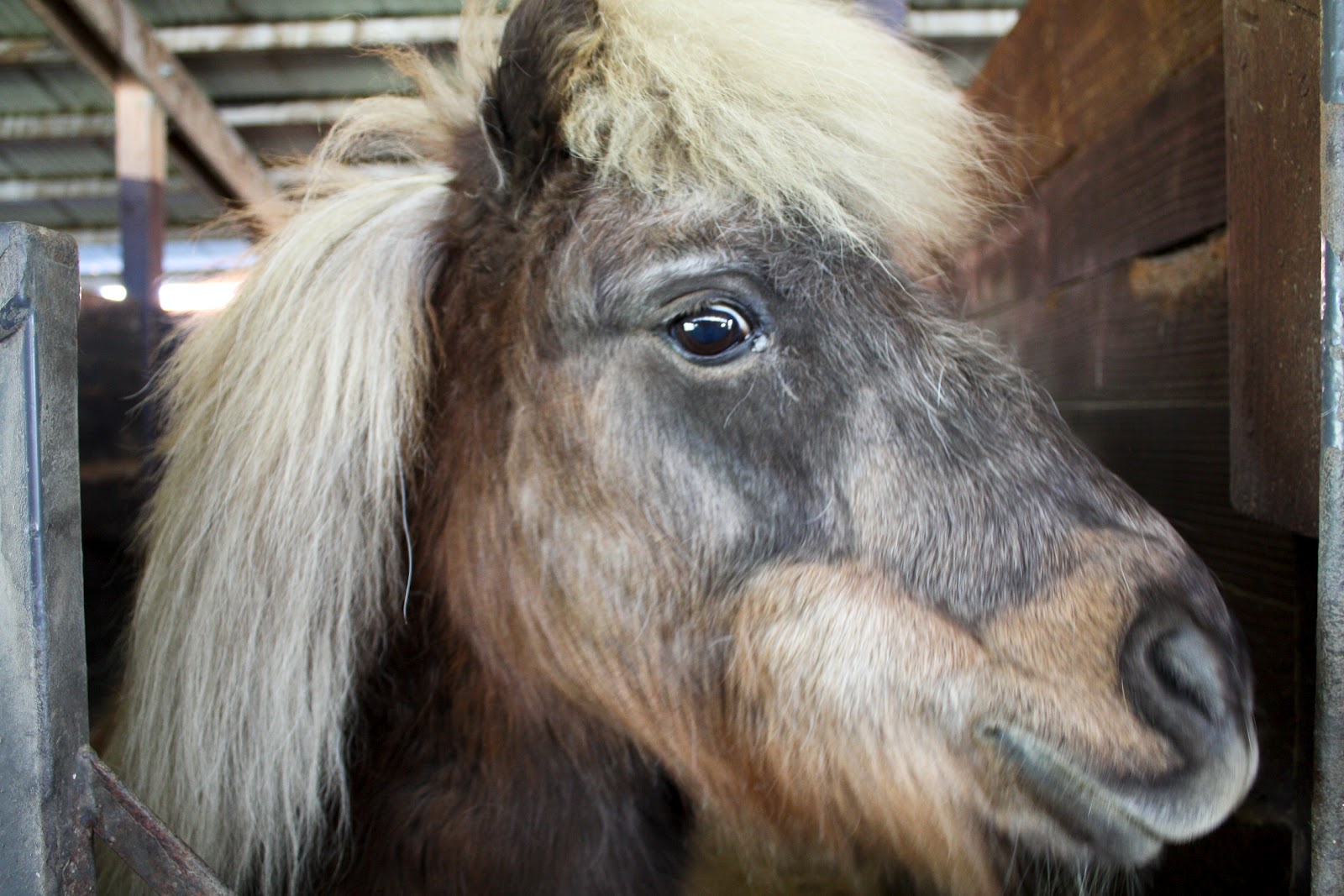
Looking for trouble...is this pony, Lucky Dog.


Look at those locks! Remind you of anyone?


Spring on the farm is full of surprises...including an adorable litter of puppies.


View from the farm stand on Ninety Farms. 


To wrap up my visit, I bought a bone-in leg and some ground lamb (frozen) from the farm stand just off the main driveway. I've got Paula Wolfert's terrific new cookbook, Food of Morocco, and a lamb tagine in my future!

If you want to reach out to Linda, she sells to both restaurants and consumers. Lamb is available by the piece or whole lamb--perfect for those with butchering aspirations--available by request.  


Ninety Farms
22912 67th Avenue NE
Arlington, WA 98223
Facebook: Ninety Farms 
(360) 435-9304

The Job Post

Found on Craig's List. Any takers?

Pastry Production/Linecook (Urban Union, Chicago)


Date: 2012-04-07, 2:53PM CDT
Reply to: swkwf-2945756505@job.craigslist.org [Errors when replying to ads?]

Urban Union is looking for a pastry production/linecook. You will need to have at least 2 years of experience in upscale, Chef driven restaurants. By upscale I mean restaurants like Boka, Purple Pig, Publican, Vera, Blackbird anything related to Charlie Trotter, Thomas Keller or Gordon Ramsay. Do you get the point? DO NOT APPLY IF YOU HAVE NOT WORKED IN RESTAURANTS LIKE THE ONE'S THAT I JUST MENTIONED. Your experience must be mostly in pastry production. You must be motivated and organized, a team player. My crew here is tight, if you don't fit in you won't be here long. No hand holding, no games, and absolutely no fucking drama. You will be expected to work and act like an adult, show proper respect and pull your weight. If you are lazy, dishonest, have a drug problem, can't tell time or think that your shit dosen't stink please do not apply. If you are interested in building your skill set in a serious restaurant and wanting to one day be the person writing this instead of reading it, then you may well be onto something wonderful. By all means attach that resume and send it my way. I will be waiting with bells on to read all about how great you are and why I should hire you. Good luck, only one of you will get the job-

  • Location: Urban Union,Chicago
  • Compensation: Depends on your experience and probably not nearly what you think that you are worth
  • Principals only. Recruiters, please don't contact this job poster.
  • Please, no phone calls about this job!
  • Please do not contact job poster about other services, products or commercial interests.
PostingID: 2945756505

Growing Pains


It's been 9 months since my last post. A simple date on the calendar, it's easy to mark the progression of time. I wish I could say "time heals all wounds" but as I write, today, I feel a little raw.

The past couple years have been marked by intense personal growth. While there have been a number of noteworthy highlights, grief and loss took center stage.

I had seven glorious months, basking in a whirlwind romance.

And then he was gone.

For a man who called multiple times a day, suddenly the calls stopped.

A week later, I learned he had been in the hospital.

The doctors discovered two bleeding brain tumors. Despite his aversion to drugs, he agreed to an aggressive treatment. While the tumors were shrinking, the tests were 'off'. A battery of tests revealed more cancer. For months, my life revolved around doctor visits and false optimism. He would never allow himself to admit he was dying. But I knew.

Yes, I knew he was dying. But when I got the call? I wasn't prepared to stop hoping. Death. It's non-negotiable. And suddenly...the battle was over.

It's been six months since he died. While the day-to-day grief has lapsed, a word or a gesture can trigger a memory, and send me into a pool of tears.

Nearly everything in my life has changed.

Things that used to matter, now seem hopelessly trivial.

I'm no longer interested in "killing time", but making the most of it.

And there is a profound sense of urgency swirling around me.


In times of both sadness and joy, I turn to the stove. I moved into a beautiful 1920's home--the kind that surely had servants in its day. And I cooked. Relentlessly. I cooked more food than we could ever eat. I cooked for the simple joy of being in the kitchen. And keeping busy. I was oddly detached when we tossed the leftovers. It wasn't about the food. It was about nourishing my soul.

Step by step, I've begun to ease back into the life I knew.

Before that delicious romance.

Before cancer.

Before my world fell apart.


Writing again. It feels good.


Come to the Table

Note: This post is in support of Near East brand's Couscous for a Cause campaign. I was already a fan of their products, but thanks to this couscous-inspired post, they're donating 250 boxes of couscous to Washington state's hunger relief agency, Northwest Harvest.

PRIZES! Comment by May 15th for a chance to win a Near East prize pack including products, recipes and another 250 boxes of couscous donated to Northwest harvest.


According to Wikipedia, couscous is a staple food throughout West Africa, Sahel, France, Spain, and the Canary Islands, Portugal, Madeira, Italy (particularly in the western Sicily Province of Trapani), as well as in Turkey, Greece, Malta, Cyprus, the Middle East and India.

Made by hand, it's a lenghty process that involves working semolina-based dough through a sieve, which forms the tiny granules of couscous. The couscous grains are then air-dried in the sun. Preparation involves steaming the tiny grains in a special pot, typically lined with a cheese cloth.

Here in the Western world, couscous is pre-steamed and dried again, which shortens the cooking time considerably--five minutes from boiling water (or stock) to fluffy couscous!

I love entertaining with couscous. When I gather friends, we serve it North African-style with a meat or vegetable stew, spooned over a heaping mound of couscous. (Near East brand's roasted garlic or parmesan are my two favorites.) Served on polished silver trays, it makes a stunning crowd-friendly presentation.


Fresh thyme and green olives are added to the couscous.


Preparing the trays for dinner.


Mounding the couscous for height....enhances the presentation.


Don't you love these trays? I'm an avid thrift store shopper and both of these trays were less than $10. Silver polish and a bit of elbow grease brought them back to life.


Layer the dish with poached artichokes, onion and lemon.


Add a light drizzle of the pan juices...


All natural lamb loin from Ninety Farms, with a beautiful Moroccan spice rub.


Strips of seared lamb crown the dish.


***

More ideas? Check out these recipes by
James Beard Award-winning chef, Jason Wilson:


with eggplant, zucchini, and chopped tomato

Couscous Chicken Crunch
with apple, pear, and sage

Pacific Albacore Tuna
with olive and lemon


Smoky Couscous with Cherry, Sage, and Pulled Pork
chipotle chile, balsamic, and beer make up the braising liquid for the pork, and the couscous is tossed with dried cherries and sage. Sounds lovely, no?

***

Photos by food photographer, Rina Jordan.